Beginn des Seitenbereichs:
Seitenbereiche:

  • Zum Inhalt (Zugriffstaste 1)
  • Zur Positionsanzeige (Zugriffstaste 2)
  • Zur Hauptnavigation (Zugriffstaste 3)
  • Zur Unternavigation (Zugriffstaste 4)
  • Zu den Zusatzinformationen (Zugriffstaste 5)
  • Zu den Seiteneinstellungen (Benutzer/Sprache) (Zugriffstaste 8)
  • Zur Suche (Zugriffstaste 9)

Ende dieses Seitenbereichs. Zur Übersicht der Seitenbereiche

Beginn des Seitenbereichs:
Seiteneinstellungen:

Deutsch de
English en
Suche
Anmelden

Ende dieses Seitenbereichs. Zur Übersicht der Seitenbereiche

Beginn des Seitenbereichs:
Suche:

Suche nach Details rund um die Uni Graz
Schließen

Ende dieses Seitenbereichs. Zur Übersicht der Seitenbereiche


Suchen

Beginn des Seitenbereichs:
Hauptnavigation:

Seitennavigation:

  • Universität

    Universität
    • Die Uni Graz im Portrait
    • Organisation
    • Strategie und Qualität
    • Fakultäten
    • Universitätsbibliothek
    • Jobs
    • Campus
    Lösungen für die Welt von morgen entwickeln – das ist unsere Mission. Unsere Studierenden und unsere Forscher:innen stellen sich den großen Herausforderungen der Gesellschaft und tragen das Wissen hinaus.
  • Forschungsprofil

    Forschungsprofil
    • Unsere Expertise
    • Forschungsfragen
    • Forschungsportal
    • Forschung fördern
    • Forschungstransfer
    • Ethik in der Forschung
    • Kommission für wissenschaftliche Integrität
    Wissenschaftliche Exzellenz und Mut, neue Wege zu gehen. Forschung an der Universität Graz schafft die Grundlagen dafür, die Zukunft lebenswert zu gestalten.
  • Studium

    Studium
    • Studieninteressierte
    • Infos für Studierende
    • Tag der offenen Tür am 09.04.2026
    • Aufnahmeverfahren
    • Lehramt Aufnahmeverfahren
  • Community

    Community
    • International
    • Am Standort
    • Forschung und Wirtschaft
    • Absolvent:innen
    Die Universität Graz ist Drehscheibe für internationale Forschung, Vernetzung von Wissenschaft und Wirtschaft sowie für Austausch und Kooperation in den Bereichen Studium und Lehre.
  • Spotlight
Jetzt aktuell
  • Aufnahmeverfahren 2026 – alle Infos
  • Crowdfunding entdecken
  • Jetzt die "Youni"-App holen
  • Klimaneutrale Uni Graz
  • Forscher:innen gefragt
  • Arbeitgeberin Uni Graz
Menüband schließen

Ende dieses Seitenbereichs. Zur Übersicht der Seitenbereiche

Beginn des Seitenbereichs:
Sie befinden sich hier:

Universität Graz treffpunkt sprachen – Zentrum für Sprache, Plurilingualismus und Fachdidaktik Unsere Forschung Plurilingualismus Publikationen
  • Über uns
  • Unser Kursangebot
  • Anmeldung und Fristen
  • Unsere Forschung
  • Neuigkeiten

Ende dieses Seitenbereichs. Zur Übersicht der Seitenbereiche

Beginn des Seitenbereichs:
Unternavigation:

  • Über uns
  • Unser Kursangebot
  • Anmeldung und Fristen
  • Unsere Forschung
  • Neuigkeiten

Ende dieses Seitenbereichs. Zur Übersicht der Seitenbereiche

Neu im Bücherregal

Effects of language backgrounds on current languaging: Varied practices, competencies and needs of deaf migrant signers in Austria


Autorin: Julia Gspandl

Erscheinungsjahr: 2026

Zeitschrift: Deafness & Education International 

Verlag: Routledge
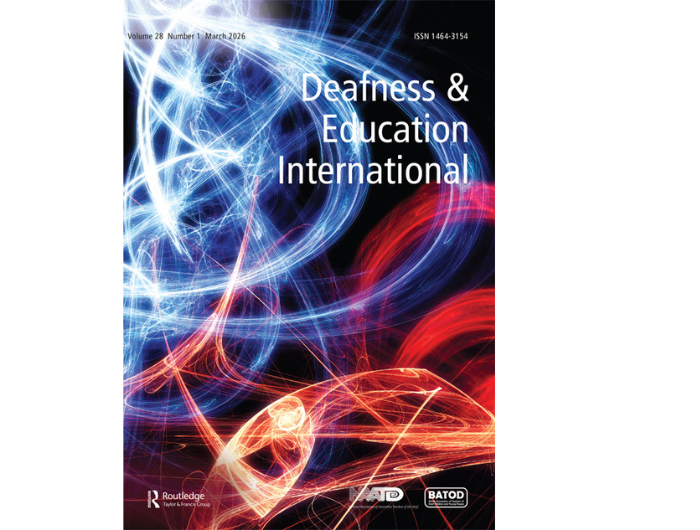
Zeitschrift ©Taylor & Francis │ Informa UK Limited
©Taylor & Francis │ Informa UK Limited

Über den Artikel

Englisch: Recent increases in deaf migration to Austria have highlighted the need for a deeper understanding of the social and linguistic realities of deaf migrant signers. Using video data, this study examines the use of non-ÖGS (Austrian Sign Language) resources and performance on two competence scales and analyses how these practices and competencies relate to participants’ linguistic backgrounds. The findings reveal the impact of the overall amount and nature of signed input throughout life, emphasising the importance of individualised intervention measures. This underscores the need for linguistically and culturally sensitive training for professionals working with deaf migrants, ensuring they can address the varying needs of this population. Challenging traditional notions of proficiency, the study calls for a more nuanced approach to understanding and supporting the language development of deaf migrant signers.
Link zum Artikel

Cover, Zeitschrift, Vorderseite ©Studia Historica Slovenica
©Studia Historica Slovenica

Transforming Language Ideologies in the Styrias and in Prekmurje


Autor:innen: Jakob Wiedner, Alja Lipavic Oštir, Chiara Wagner, Dorian Penšek-Rader und Jernej Čelofiga

Erscheinungsjahr: 2025

Zeitschrift: Studia Historica Slovenica

Verlag: Zgodovinsko društvo dr. Franca Kovačiča v Mariboru


Über den Artikel

Englisch: The article examines how monolingual ideologies shape language policies and identities in the Slovenian-Austrian border region through a qualitative analysis of interviews. Rooted in ethno-linguistic nationalism, these ideologies continue to influence language policies, particularly through linguistic purism and a persistent "discourse of threat". Monolingual narratives often overlook historical multilingual realities and cross-border communities. Interview data show that younger generations are shifting toward linguistic pragmatism, embracing local dialects, English, and a European identity. Overall, while nationalistic discourses still linger, generational change and EU integration foster a more inclusive understanding of languages and identities in the region.

Link zum Artikel

Fragmented Geographies: A Short Critical Anthology of Jewish Women’s Writing in the Balkans and Latin America


Herausgeberinnen: Oana Hergenröther, Marjorie Agosín und Jelena Filipović

Erscheinungsjahr: 2025

Verlag: Solis Press


Buch, Buchcover ©© 2025 Solis Press Cover artwork: Michal Held Delaroza, “Fragmented Geographies,” 2023.
© 2025 Solis Press Cover artwork: Michal Held Delaroza, “Fragmented Geographies,” 2023.

Inhalt

Englisch: Love, Loss, and Life between the Biobío and the Danubio

This anthology embraces a physical stretch of land, sea, mountain, marsh, desert, and woods that lies between the two rivers, the Biobío originating in the Chilean Andes and flowing into the Pacific at Concepción, Chile, and the Danube flowing through central and eastern Europe. This space is not measured in miles but in the spiritual and creative journeys of Jewish women writers from Latin America and the Balkans. Spanning novels, memoirs, and poetry, their diverse voices create a unique literary landscape where two seemingly distant regions find common ground in shared histories of refuge, marginality, and sanctuary.
 

Buchbestellung

Zeitschriftencover ©Akadémiai Kiadó
©Akadémiai Kiadó

Some linguistic peculiarities of Romani-origin words in the ethnolinguistic repertoire of the Romungros


Autor:innen: Márton A. Baló und Zuzana Bodnárová

Erscheinungsjahr: 2025

Zeitschrift: Acta Linguistica Academica. An International Journal of Linguistics

Verlag: AKJournals 


Über den Artikel

Englisch: This paper describes some linguistic peculiarities of Romani-origin words in the ethnolinguistic repertoire of the Romungros (ERR), a non-standard Hungarian variety spoken by the descendants of South Central Romani speakers. Based on empirical data, we examine various linguistic features, showing that ERR exhibits reduced morphological complexity alongside increased lexical and phonological complexity. We demonstrate that the innovative features of ERR, such as its flexibility in incorporating Romani roots, the use and the reinterpretation of Romani linguistic features and the violations of the grammatical rules of standard Hungarian are rooted in linguistic creativity and serve to mark group identity.
 

Link zum Artikel


Für alle, die mehr wollen

Übersicht unserer bisherigen Publikationen zum Nachschlagen

Beginn des Seitenbereichs:
Zusatzinformationen:

Universität Graz
Universitätsplatz 3
8010 Graz
  • Anfahrt und Kontakt
  • Kommunikation und Öffentlichkeitsarbeit
  • Moodle
  • UNIGRAZonline
  • Impressum
  • Datenschutzerklärung
  • Cookie-Einstellungen
  • Barrierefreiheitserklärung
Wetterstation
Uni Graz

Ende dieses Seitenbereichs. Zur Übersicht der Seitenbereiche

Ende dieses Seitenbereichs. Zur Übersicht der Seitenbereiche

Beginn des Seitenbereichs:

Ende dieses Seitenbereichs. Zur Übersicht der Seitenbereiche